How I Found My Balance—And Why It Changed Everything
Balance isn’t just about not falling over—it’s about stability in movement, confidence in daily life, and long-term independence. I used to take it for granted until a small stumble made me realize how much I relied on it. After exploring simple, science-backed habits, I noticed real improvements. This is a practical guide to better balance through lifestyle changes—no gym required, just consistency and awareness. What began as a personal concern turned into a journey of discovery, revealing how deeply balance affects every aspect of health, from posture to brain function. The good news? Improving it doesn’t demand extreme effort or expensive equipment. It starts with understanding, awareness, and a few intentional choices woven into everyday life.
The Hidden Crisis of Poor Balance
Beyond the obvious risk of falls, poor balance is a quiet but growing health issue that often goes unnoticed until it causes real harm. Balance is not merely a physical skill; it is a complex function involving coordination between the brain, inner ear, muscles, and sensory nerves. It allows us to walk confidently, shift positions smoothly, and respond to changes in terrain without conscious thought. Yet, in modern life, this essential ability is frequently undermined by habits we don’t even recognize as harmful. Sedentary routines, prolonged sitting, and lack of varied movement gradually weaken the body’s postural control systems, making even simple tasks like climbing stairs or stepping off a curb more challenging than they should be.
Many people assume balance only becomes a concern in later years, but research shows decline can begin as early as the thirties and forties. A study published in the Journal of the American Geriatrics Society found that balance abilities start to diminish in midlife, often without noticeable symptoms at first. This slow erosion means that by the time someone experiences a fall or feels unsteady, the underlying systems have already weakened significantly. The danger lies in this invisibility—because balance feels automatic when it works well, its deterioration sneaks in unnoticed. A minor misstep on flat ground, a wobble while standing on one foot, or hesitation on uneven pavement may be early warning signs ignored far too often.
For many adults, especially women managing household responsibilities, caregiving, or full-time work, the idea of adding balance training to an already full schedule may seem impractical. Yet the consequences of neglecting it are far more disruptive. Poor balance increases the risk of injuries, reduces mobility, and can lead to a cycle of fear and avoidance—where the fear of falling actually increases the likelihood of falling. Everyday scenarios like carrying groceries, playing with grandchildren, or walking the dog become sources of anxiety rather than enjoyment. Recognizing balance as a foundational health skill, not just a senior concern, is the first step toward meaningful prevention.
Why Balance Matters More Than You Think
Beyond preventing falls, good balance plays a vital role in overall physical resilience and long-term independence. It supports joint health by promoting proper alignment and reducing strain on knees, hips, and ankles during movement. When balance is strong, the body moves efficiently, absorbing impact and adjusting to shifts in weight with minimal stress. This protective effect helps prevent overuse injuries and degenerative conditions like osteoarthritis. Moreover, balance is closely tied to functional mobility—the ability to perform daily activities safely and independently. Whether bending to pick up a dropped item, reaching for a high shelf, or stepping into a shower, these seemingly simple actions rely on coordinated balance and body awareness.
What many don’t realize is that balance is not just a physical skill—it’s a cognitive one, too. The brain constantly processes sensory input from the eyes, inner ear, and body to maintain stability. This requires focus, coordination, and real-time decision-making. Studies have shown that balance training can enhance neural plasticity, the brain’s ability to adapt and form new connections. A 2017 review in Frontiers in Aging Neuroscience highlighted that older adults who engaged in regular balance exercises demonstrated improved executive function, attention, and processing speed. These cognitive benefits suggest that improving balance may help maintain mental sharpness as we age, offering a dual advantage for both body and mind.
Furthermore, balance training fosters greater body awareness, also known as proprioception—the ability to sense where your limbs are in space without looking. This internal feedback system is crucial for coordination and movement precision. When proprioception is sharp, movements become more fluid and controlled, reducing the risk of awkward twists or missteps. For individuals recovering from minor injuries or managing chronic conditions like arthritis, improved proprioception can mean the difference between cautious, limited movement and confident, active living. The ripple effects of better balance extend into emotional well-being, too—feeling steady on your feet translates into feeling more in control of your life.
The Science Behind How We Stay Upright
Staying upright is a remarkable feat of biological engineering, made possible by the seamless integration of three key systems: the vestibular system in the inner ear, the visual system, and the somatosensory system. Together, they form what scientists often describe as the body’s GPS—constantly tracking position, motion, and orientation. The vestibular system detects head movement and spatial orientation, helping the brain understand whether you’re moving forward, turning, or tilting. The visual system provides external cues—like the horizon or nearby objects—to help judge stability. Meanwhile, the somatosensory system gathers feedback from muscles, joints, and skin, especially in the feet, to sense contact with the ground and subtle shifts in weight.
These systems work in a continuous feedback loop, sending signals to the brainstem and cerebellum, which then coordinate muscle responses to keep the body balanced. Imagine standing on a moving bus: your eyes track the passing scenery, your inner ear senses acceleration, and your feet feel the vibrations through the floor. Your brain synthesizes all this information in milliseconds, making tiny adjustments in your leg and core muscles to prevent a fall. This process is so automatic that we rarely think about it—until something disrupts it. When one system is impaired, the others must compensate. For example, poor lighting reduces visual input, forcing greater reliance on the inner ear and foot sensation. If those are also weakened, balance becomes unstable.
Modern lifestyles can quietly degrade these systems over time. Excessive screen use, for instance, can lead to visual fatigue and reduced depth perception, weakening the visual contribution to balance. Prolonged sitting limits the activation of foot and leg muscles, dulling somatosensory feedback. Even something as simple as wearing supportive shoes all the time can reduce foot sensitivity, since the soles aren’t exposed to varied textures and pressures. Age-related changes, such as decreased inner ear function or slower nerve conduction, do occur, but they are not inevitable drivers of poor balance. Research shows that lifestyle factors play a larger role than age alone, meaning many aspects of balance decline are modifiable through conscious effort and regular practice.
Daily Habits That Secretly Sabotage Your Balance
While aging is often blamed for declining balance, everyday habits play a far greater role in weakening stability than most people realize. One of the most pervasive culprits is prolonged sitting. Hours spent at a desk, on the couch, or in the car reduce the body’s need to engage core and postural muscles, leading to stiffness and poor coordination. Over time, this sedentary pattern dulls the nervous system’s responsiveness, making it harder to react quickly to changes in balance. Even standing in one place for long periods, such as while cooking or doing household chores, can contribute if there’s little shifting of weight or movement variation.
Footwear is another overlooked factor. Many common shoes—especially those with thick cushioning, narrow toe boxes, or elevated heels—limit natural foot movement and reduce ground feedback. This impairs the somatosensory system, essentially “numbing” the feet’s ability to sense subtle changes in terrain. Without this critical input, the brain receives less accurate information, increasing the risk of missteps. In contrast, walking barefoot on safe, varied surfaces—like grass, tile, or carpet—can enhance foot strength and sensory awareness. Even going sockless at home for short periods can help reawaken the foot’s natural mechanics and improve balance over time.
Another silent saboteur is movement monotony—the tendency to repeat the same motions every day without variation. Walking on flat, even surfaces, taking the same route, or avoiding stairs limits the body’s exposure to balance challenges. Without these small, natural stressors, the balance systems don’t get the stimulation they need to stay sharp. Introducing diversity into daily movement—like taking a different path, walking on gravel or sand, or stepping over curbs deliberately—can make a meaningful difference. Simple swaps, such as standing while talking on the phone, doing light stretches during TV commercials, or parking farther from store entrances, add up to improved stability without requiring extra time or effort.
Simple, No-Equipment Exercises That Actually Work
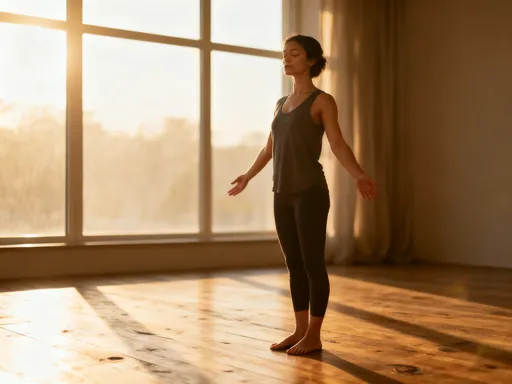
The good news is that balance can be improved at any age with simple, accessible exercises that require no special equipment or fitness level. These movements work by retraining the brain-body connection and strengthening the muscles and neural pathways involved in stability. The key is consistency—just five to ten minutes a day can lead to noticeable improvements within weeks. Starting near a sturdy wall or chair ensures safety, allowing support if needed while building confidence. As balance improves, the goal is to gradually reduce reliance on support and increase duration, making the exercises more challenging over time.
One foundational exercise is the **heel-to-toe walk**, also known as the tandem walk. This involves walking in a straight line with the heel of one foot touching the toe of the other, like walking on a tightrope. It challenges coordination and engages the core and leg muscles responsible for balance. Practicing this for 20 steps forward and back, two to three times a day, enhances gait stability and body awareness. Another effective move is the **single-leg stand**, where one foot is lifted slightly off the ground while maintaining an upright posture. Holding this for 20 to 30 seconds on each side strengthens ankle stability and improves focus. For added challenge, try closing the eyes briefly—this removes visual input and forces greater reliance on inner ear and foot feedback.
The **clock reach** exercise builds dynamic balance by simulating reaching in different directions while standing on one leg. Imagine a clock face around you—reach forward (12 o’clock), to the side (3 or 9 o’clock), and diagonally (1 or 11 o’clock)—using the arms to extend while keeping the standing leg stable. This trains the body to control movement in multiple planes, mimicking real-life actions like grabbing a pot from the stove or reaching for a seatbelt. **Weight shifts** are another easy yet powerful exercise: stand with feet shoulder-width apart and slowly shift weight from side to side or front to back, feeling the pressure change in the feet. This enhances foot sensitivity and teaches controlled movement. Finally, the **tandem stance**—standing with one foot directly in front of the other, heel to toe—can be held for 30 seconds to build static balance.
These exercises can be integrated into daily routines—doing a few reps while waiting for the kettle to boil, brushing teeth, or watching TV. Over time, people often report a steadier gait, improved posture, and greater confidence in movement. The benefits extend beyond physical stability; many notice increased focus and a stronger mind-body connection, reinforcing the idea that small, consistent actions yield meaningful results.
Lifestyle Tweaks for Long-Term Stability
Sustainable balance improvement goes beyond structured exercises—it thrives on mindful living and environmental awareness. One of the most effective strategies is practicing **mindful movement**: paying attention to how you walk, stand, and shift positions throughout the day. Instead of moving on autopilot, try walking with deliberate posture—shoulders relaxed, head aligned, steps smooth and balanced. Climbing stairs one at a time, with full foot contact and controlled motion, also strengthens coordination. These small acts of awareness train the brain to prioritize stability in everyday actions.
Engaging in activities that naturally challenge balance can also make a lasting difference. Dancing, for example, combines rhythm, coordination, and quick directional changes, all of which enhance neural and muscular control. Tai chi, a gentle martial art, has been widely studied for its balance benefits, particularly in older adults. Research published in the New England Journal of Medicine found that regular tai chi practice significantly reduced fall risk. Hiking on uneven trails, gardening, or even playing with children or pets—activities that involve unpredictable movements—also provide valuable balance training in a fun, natural way.
Home environment plays a crucial role, too. Reducing clutter, especially in hallways and near stairs, minimizes tripping hazards. Improving lighting, particularly in bathrooms and entryways, ensures better visual input for balance. Using non-slip mats in the shower and securing loose rugs can prevent accidents. These changes create a safer space while encouraging more confident movement. The principle is not about eliminating risk entirely, but about supporting the body’s ability to respond effectively when challenges arise. Stability is not just built in the body—it’s nurtured by the spaces we live in.
When to Seek Professional Help—and Why It’s Smart
While most people can improve balance through lifestyle changes and simple exercises, there are times when professional guidance is essential. Certain symptoms should not be ignored: frequent dizziness, unexplained falls, persistent unsteadiness, or a sensation of spinning (vertigo) may indicate underlying conditions that require medical evaluation. Inner ear disorders, neurological issues, or medication side effects can all contribute to balance problems and should be assessed by a healthcare provider. Ignoring these signs can delay treatment and increase the risk of serious injury.
Physical therapists, especially those trained in vestibular rehabilitation, are highly skilled in diagnosing and treating balance disorders. They can perform specialized assessments to identify which of the three balance systems—vestibular, visual, or somatosensory—is underperforming and design personalized exercise programs to address specific deficits. These programs often include gaze stabilization exercises, habituation techniques, and balance retraining tailored to individual needs. Unlike general fitness routines, vestibular therapy is precise and evidence-based, offering targeted support for those with chronic dizziness or imbalance.
Seeking help is not a sign of weakness—it’s a proactive step toward long-term health. Many women in their forties and fifties begin noticing subtle changes in coordination or confidence in movement, and early intervention can prevent more significant issues later. A physical therapist can also ensure that home exercises are performed safely and effectively, maximizing benefits and minimizing risk. Even for those without symptoms, a preventive balance screening can provide valuable insights and peace of mind. Professional care complements self-directed efforts, creating a comprehensive approach to stability and well-being.
Improving balance isn’t about fixing something broken—it’s about honoring your body’s need for stability and movement variety. These changes don’t require dramatic effort, but they yield lasting results. By integrating awareness and small challenges into everyday life, anyone can build a stronger foundation—literally and figuratively. It’s not just about staying upright; it’s about living with more confidence, control, and freedom. The journey to better balance begins with a single step—mindful, steady, and full of possibility.